


4
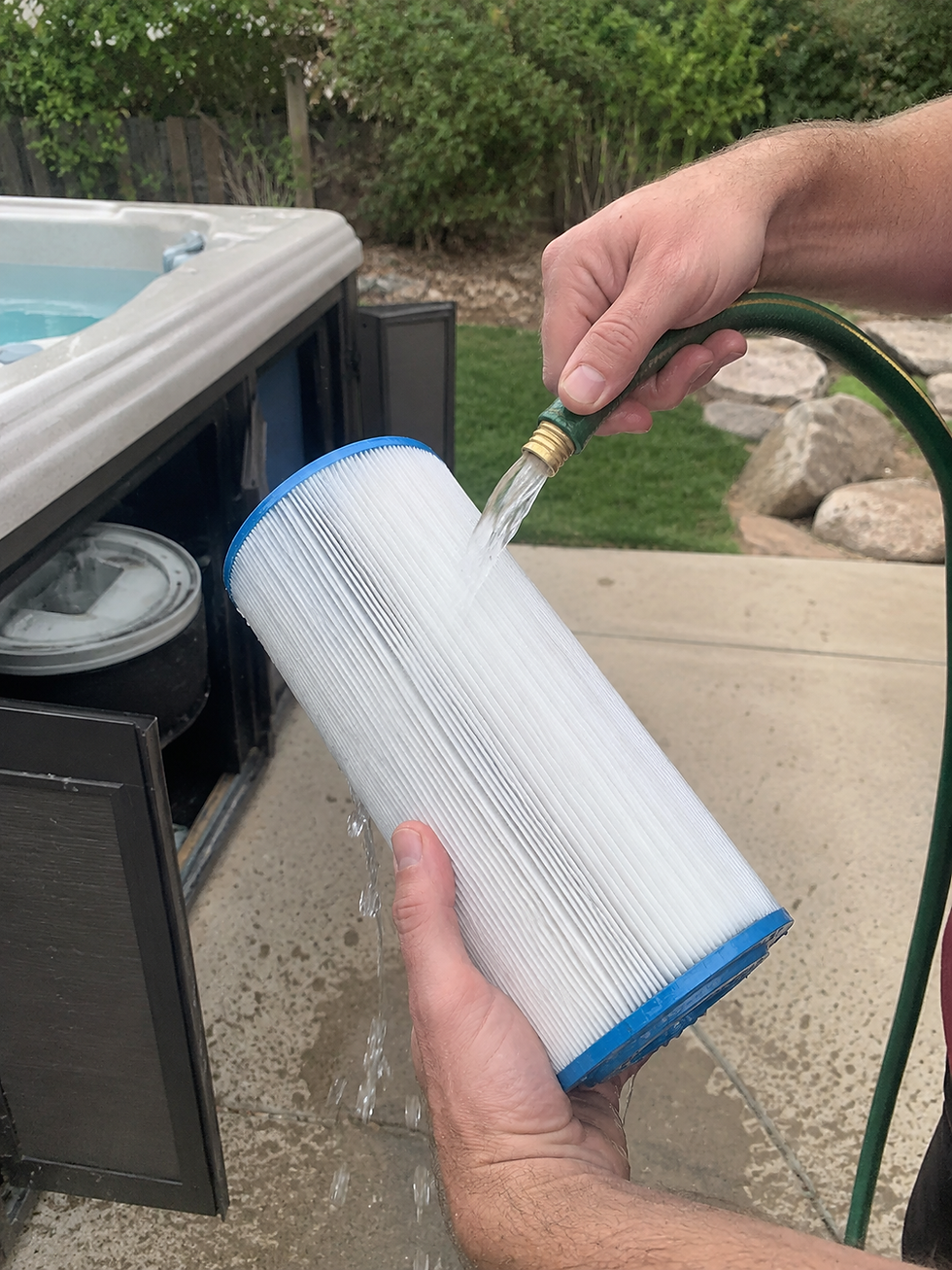
The filter removes hair, oils, debris, and small particles from the water, while the circulation system moves treated water throughout the spa. Water chemistry alone cannot make up for a dirty filter, low water level, or poor circulation. ✓ Keep the water at the proper level and make sure the filter and intake areas are clear. ✓ Rinse the filter thoroughly with a garden hose about once a month, cleaning carefully between the pleats. ✓ Use an approved filter cleaner when deeper cleaning is needed, and rinse the filter completely before reinstalling it. Avoid household soap and high-pressure washers because they can damage the filter or create foam. Reduced jet pressure, cloudy water, or flow-related error messages may indicate a dirty or restricted filter. Replace filters that are damaged, worn, or no longer come clean.
Filtration
Understanding these four basics makes most spa water problems easier to prevent and correct.
The Four Basics of Spa Water Care


3
Oxidizer—often called spa shock—helps break down sweat, body oils, lotions, and other contaminants that build up in the water. This can improve clarity, reduce odors and foam, and help your sanitizer work more effectively. Shock is an important part of water care, but it does not replace your regular sanitizer. ✓ Use after heavy use or according to the schedule recommended for your water-care system. ✓ Add it only when the spa is empty and the water is circulating. ✓ Leave the cover open for the amount of time stated on the product label.
Oxidizing (Shock)
2
Sanitizer helps control bacteria and keeps the water safe between uses. Warm water, jets, lotions, sweat, and multiple bathers can use up sanitizer more quickly, so maintaining a steady level is important—even when the water looks clear. ✓ Test the sanitizer before using the spa and again after heavy use. ✓ If the level is low, add the appropriate product according to its label, circulate the water, and retest before entering. ✓ Use the correct test strips for your system. Chlorine, bromine, and FROG SmartChlor systems are tested and interpreted differently. Never mix different sanitizers or combine chemicals. If you are changing to a different water-care system, ask us for the correct startup procedure first.
Sanitizing
1
Water Balance
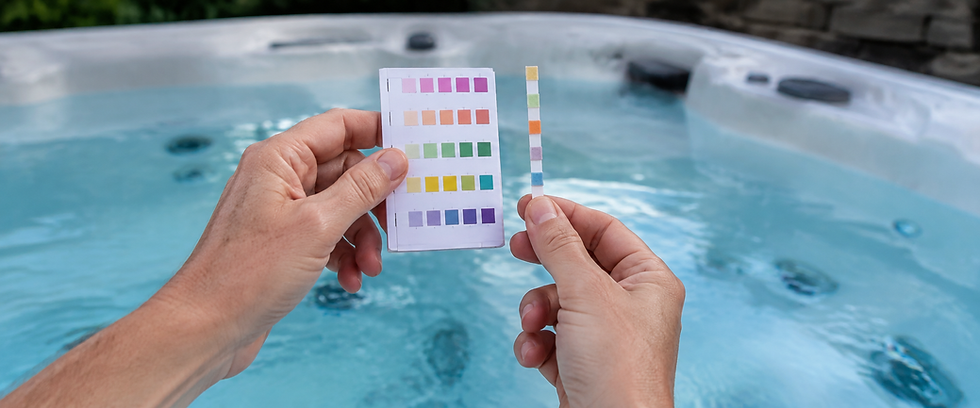
Balanced water is the foundation of good spa care. The three main levels to watch are pH, total alkalinity, and sanitizer. Keeping them within the recommended ranges helps the sanitizer work properly, makes the water more comfortable, and protects the spa from corrosion and scale. ✓ Test with strips made for your specific water-care system. ✓ If the pH keeps changing, check the total alkalinity—it helps keep the pH stable. ✓ Adjust only one chemical at a time. Allow the water to circulate, then test again before adding anything else. ✓ Test with strips made for your specific water-care system. ✓ If the pH keeps changing, check the total alkalinity—it helps keep the pH stable. ✓ Adjust only one chemical at a time. Allow the water to circulate, then test again before adding anything else. Low pH can cause irritation and damage spa components. High pH can lead to cloudy water, scale, and reduced sanitizer effectiveness. Follow the ranges listed for your spa and chemical system
A Simple Hot Tub Maintenance Routine
Small habits can keep your water clear, comfortable, and ready when you are


Before Every Soak
Look before you soak. The water should be clear enough to see the seats and bottom.
Test the water. Use the correct test strips for your water-care system.
Wait if something looks wrong. Don’t enter cloudy, unusually foamy, or strong-smelling water.
After Every Soak
Remove leaves and debris, and wipe away any oils or residue collecting around the waterline.
Oxidize or shock the water as directed for your sanitizer system and amount of spa use.
If chemicals are added, keep everyone out and circulate the water with the cover open for the time stated on the label. Close the cover once the water is ready.
Weekly Care
Test the sanitizer, pH, and total alkalinity. Adjust one chemical at a time, allow the water to circulate, and retest.
Inspect the sanitizer system. Check the floater, cartridge, or dispenser and replace or refill it as directed.
Check water level, add fresh water accordingly.
Monthly Care
Clean the filter(s) and reinstall, Replace every 6-9 months.
Complete a full water check. Test sanitizer, pH, total alkalinity, and calcium hardness—or bring a fresh sample to Crystal Spas.
Inspect and clean the spa. Wipe the waterline and cover, check the water level and circulation, and look for leaks, buildup, or damage.
3-4 Months
Deep-clean the filter with a spa-filter cleaning solution. Rinse thoroughly and inspect the pleats, bands and end caps for wear or damage.
Inspect the spa cover and cabinet. Clean the cover with a spa-safe product and check for cracking, broken straps, sagging or excessive weight.
Check for developing problems. Look around the spa for moisture, small leaks, corrosion, unusual noises or changes in water pressure.
After Heavy Use
Deep-clean the filter with a spa-filter cleaning solution. Rinse thoroughly and inspect the pleats, bands and end caps for wear or damage.
Inspect the spa cover and cabinet. Clean the cover with a spa-safe product and check for cracking, broken straps, sagging or excessive weight.
Check for developing problems. Look around the spa for moisture, small leaks, corrosion, unusual noises or changes in water pressure.
Annual Drain & Refill
Clean the plumbing first. Add a spa plumbing cleaner and circulate it according to the product directions. When complete, turn off power to the spa at the breaker.
Drain and clean the spa. Drain according to the manufacturer’s instructions. Wipe the shell, seats and waterline with a spa-safe cleaner—avoid household soaps or abrasive products.
Deep-clean the filter. Soak it in spa-filter cleaner, rinse it thoroughly and inspect it for worn pleats, damaged bands or cracked end caps. Replace it when needed.
Refill correctly. Follow the manufacturer’s directions—many spas should be filled through the filter compartment to help prevent air locks. Do not restore power until the spa is properly filled.
Restart and rebalance. Check for normal circulation, then balance total alkalinity, pH and calcium hardness before establishing the proper sanitizer level. Circulate and retest the water before soaking.
**Cold-weather reminder: Never leave a drained spa exposed to freezing temperatures. Water can remain inside the plumbing even after the shell has been emptied.**
Chemical Guide
Explore our selection of premium spa chemicals designed to keep your water crystal clear and perfectly balanced.
Spa Sanitizer
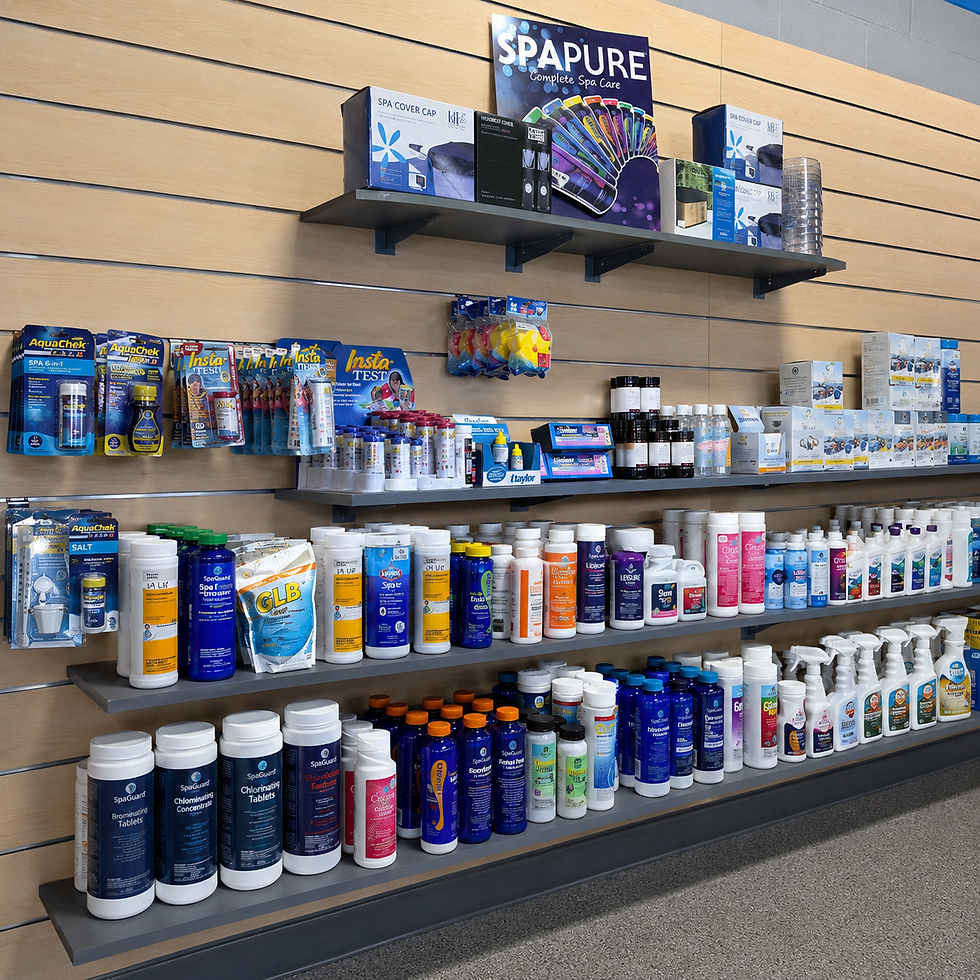
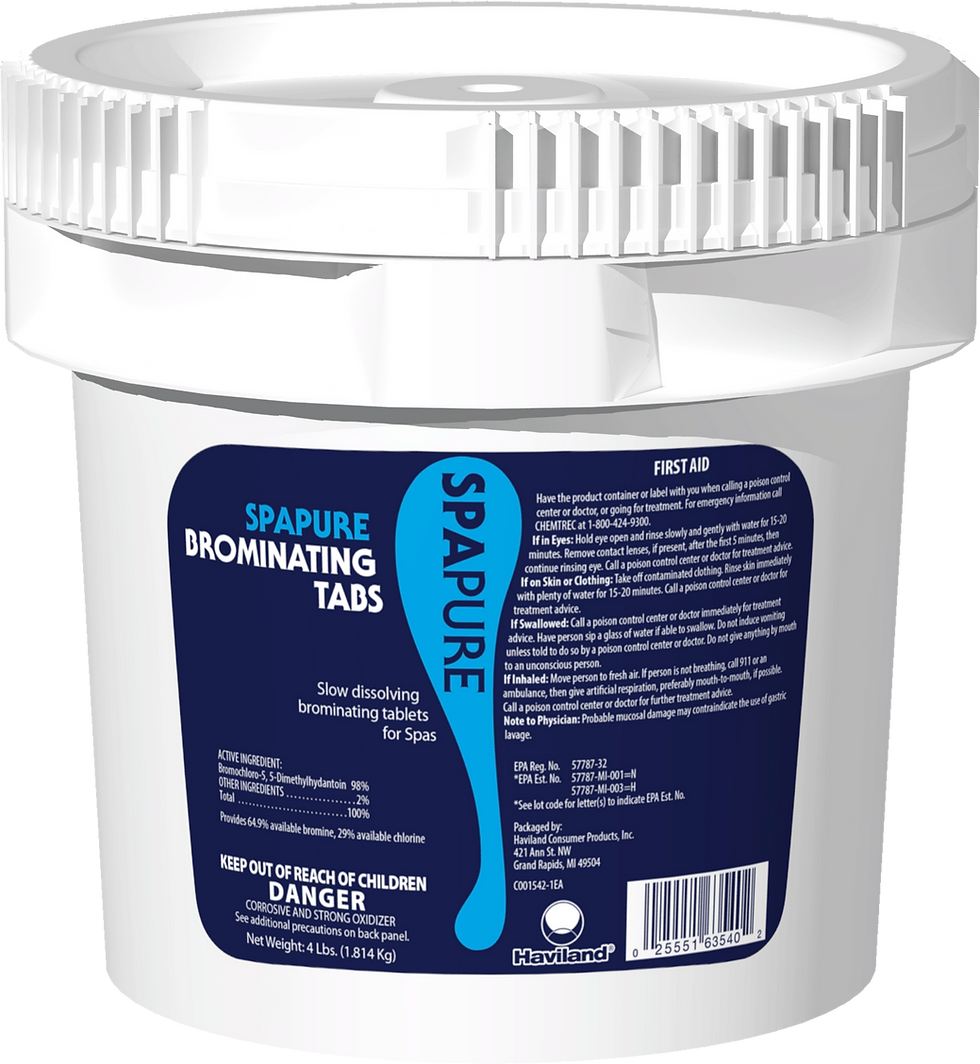
Sanitizer keeps bacteria under control and helps keep the water safe and clear. Test regularly, maintain the recommended level and use only products designed for your system. Do not combine different sanitizer systems unless specifically instructed.

Shock Oxidizer
Shock breaks down sweat, lotions and other material left behind by bathers, helping the sanitizer work more effectively. Use it after heavy use or according to your system’s routine; shock does not replace your regular sanitizer.

pH Down
This lowers the pH when it is too high. Use it when testing shows a high reading, which can contribute to cloudy water, scale and less-effective sanitizer.

pH Up
This raises the pH when the water is too acidic. Use it only when testing shows a low pH, since low pH can be uncomfortable and hard on spa components.
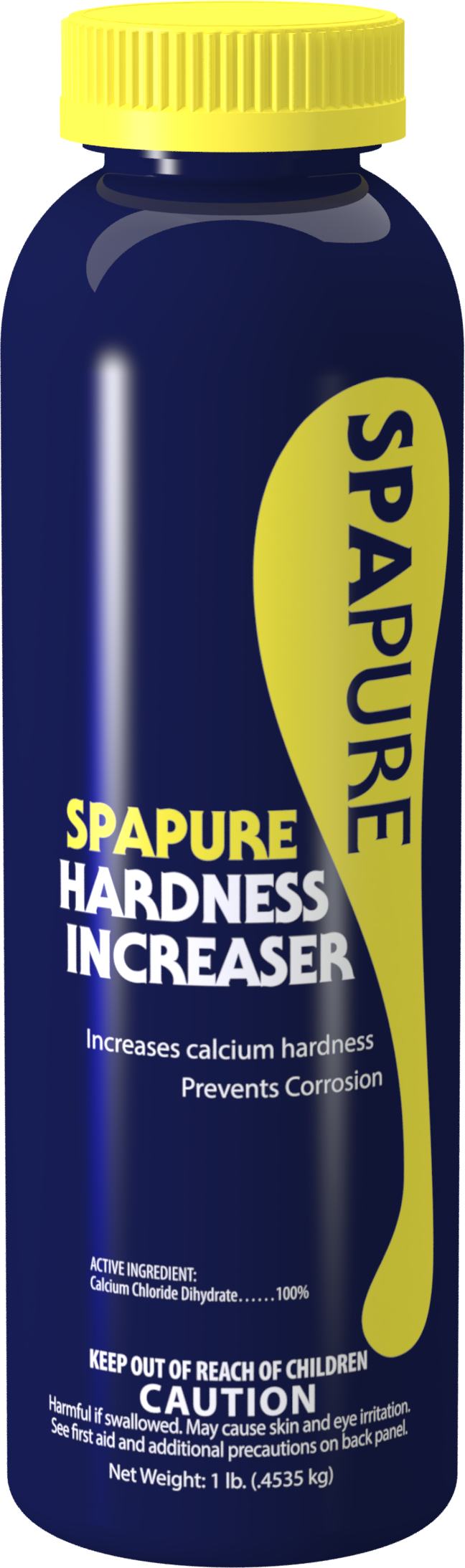
Calcium Hardness
This adds calcium when the fill water is too soft. Use it after testing shows low calcium hardness to help protect the spa’s surfaces and equipment.

Clarifier gathers very small particles so the filter can remove them more easily. Use it occasionally for slightly cloudy water—not as a substitute for proper sanitizer, balanced water or a clean filter.
Water Clarifier

Stain and Scale Control
This helps prevent minerals and metals from leaving deposits or stains on the spa. It is especially useful at startup, after refilling or when your source water contains high mineral levels.

System Cleanse
Over time the spa internals accumulate an invisible layer of gunk. Gunk leads to cloudy water or other annoying water conditions. System Cleanse lifts gunk off plumbing walls and other surfaces so it can be removed once the spa water is drained.

Defoamer
Defoamer temporarily knocks down unwanted foam. Use it sparingly for quick relief, but recurring foam usually means the filter needs attention or the water contains too much soap, oil or dissolved residue.

Phosphate Remover
This lowers excessive phosphate levels when testing shows they are contributing to a water-care problem. It is not needed in every spa, so use it only when recommended for your particular system.

Alkalinity Increaser
Total alkalinity helps keep the pH from moving up and down too easily. Use alkalinity increaser when testing shows a low reading, and correct alkalinity before making final pH adjustments.

Enzyme Treatment
Enzymes help break down body oils, lotions and other organic residue. They can be used as optional routine maintenance to reduce waterline buildup and help the water stay clearer.